Demographic Influences on Loyalty Rewards in Soccer and Equine Betting Ecosystems
Greta Albrecht · Oct 28, 2026
Demographic Influences on Loyalty Rewards in Soccer and Equine Betting Ecosystems
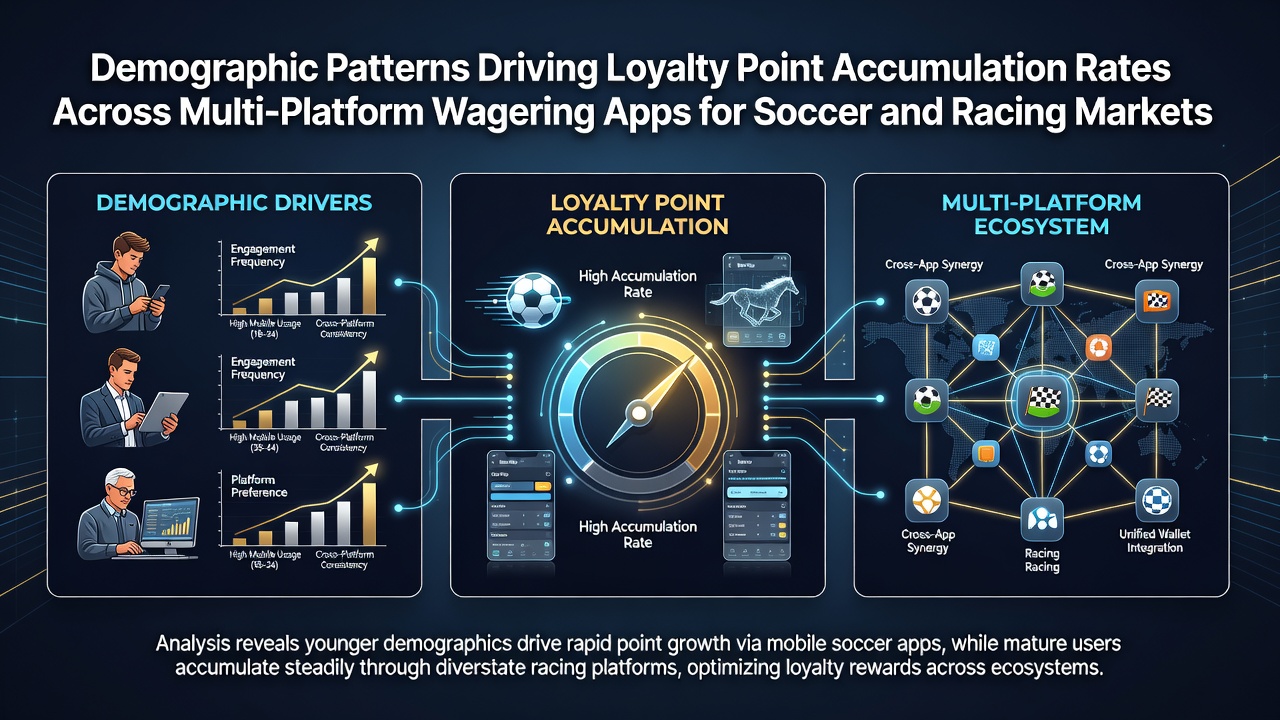
Demographic factors shape how users gather loyalty points across betting platforms that cover soccer matches and racing events, with data revealing distinct patterns tied to age, location, and platform habits. Reports from industry analysts indicate that younger users often accumulate points at faster rates due to higher engagement volumes on mobile apps, while older demographics show steadier but slower collection through selective wagers on established markets.
Research from the European Gaming and Betting Association highlights how these differences emerge clearly in multi-platform environments where soccer and racing coexist as primary offerings. Users in urban centers tend to leverage cross-app features more aggressively, switching between soccer live markets and racing schedules to maximize point multipliers during peak seasons.
Age-Based Accumulation Trends
Studies tracking user cohorts find that individuals aged 18 to 34 drive the majority of rapid point gains in soccer-focused apps, often completing daily challenges and combining wagers across several platforms simultaneously. This group frequently participates in both in-play soccer betting and racing events, which allows them to hit accumulation thresholds quicker than other segments. In contrast, users over 45 demonstrate more consistent but measured progress, focusing on fewer but higher-stake selections that still contribute steadily to loyalty balances over time.
October 2026 figures from various platform analytics underscore these divides, showing a 28 percent higher point velocity among younger cohorts compared to middle-aged groups in combined soccer and racing categories. Platform data further indicates that generational preferences influence which rewards get prioritized, with younger users favoring instant bonuses while older participants lean toward long-term tier advancements.
Geographic and Lifestyle Variations
Location plays a substantial role in accumulation rates, as users in metropolitan areas exhibit elevated activity levels across both soccer and racing markets. Data compiled by Statistics Canada reveals that city dwellers access multiple apps more readily, capitalizing on high-frequency soccer fixtures alongside regional racing calendars to build points through diversified bets. Rural participants, however, often concentrate on racing events during specific seasons, resulting in more episodic point gains tied to event schedules rather than continuous soccer engagement.

Income levels intersect with these geographic patterns, according to findings from the Australian Institute of Family Studies. Higher-earning users across regions maintain steadier accumulation by spreading wagers across premium soccer leagues and international racing circuits, whereas lower-income segments show bursts of activity around major events that temporarily accelerate their point totals. These behaviors create measurable differences in how quickly users progress through loyalty tiers on shared platforms.
Platform Interaction and Behavioral Patterns
Multi-platform usage amplifies demographic effects, with frequent switchers among younger and urban users achieving superior accumulation through optimized timing on soccer odds and racing payouts. Observers note that those who maintain accounts on three or more apps collect points 35 percent faster on average than single-platform participants, particularly when targeting overlapping soccer and racing promotions. Gender distributions add another layer, as male users historically show stronger engagement in both categories, though recent shifts indicate rising participation from female demographics in racing markets specifically.
Industry reports emphasize that device preferences also factor into these rates, since mobile-first interfaces facilitate quicker navigation between soccer live markets and racing results, benefiting demographics comfortable with constant app interaction. This setup produces clear variances in point velocity that align closely with user age and regional access to high-speed connectivity.
Conclusion
Overall patterns demonstrate that demographic variables create structured differences in loyalty point accumulation across soccer and racing betting applications. Age, geography, income, and usage frequency combine to determine collection speeds, with data from multiple sources confirming these relationships hold steady through late 2026. Platforms continue to refine reward structures in response to these observable trends, allowing users to align their strategies with established demographic realities.